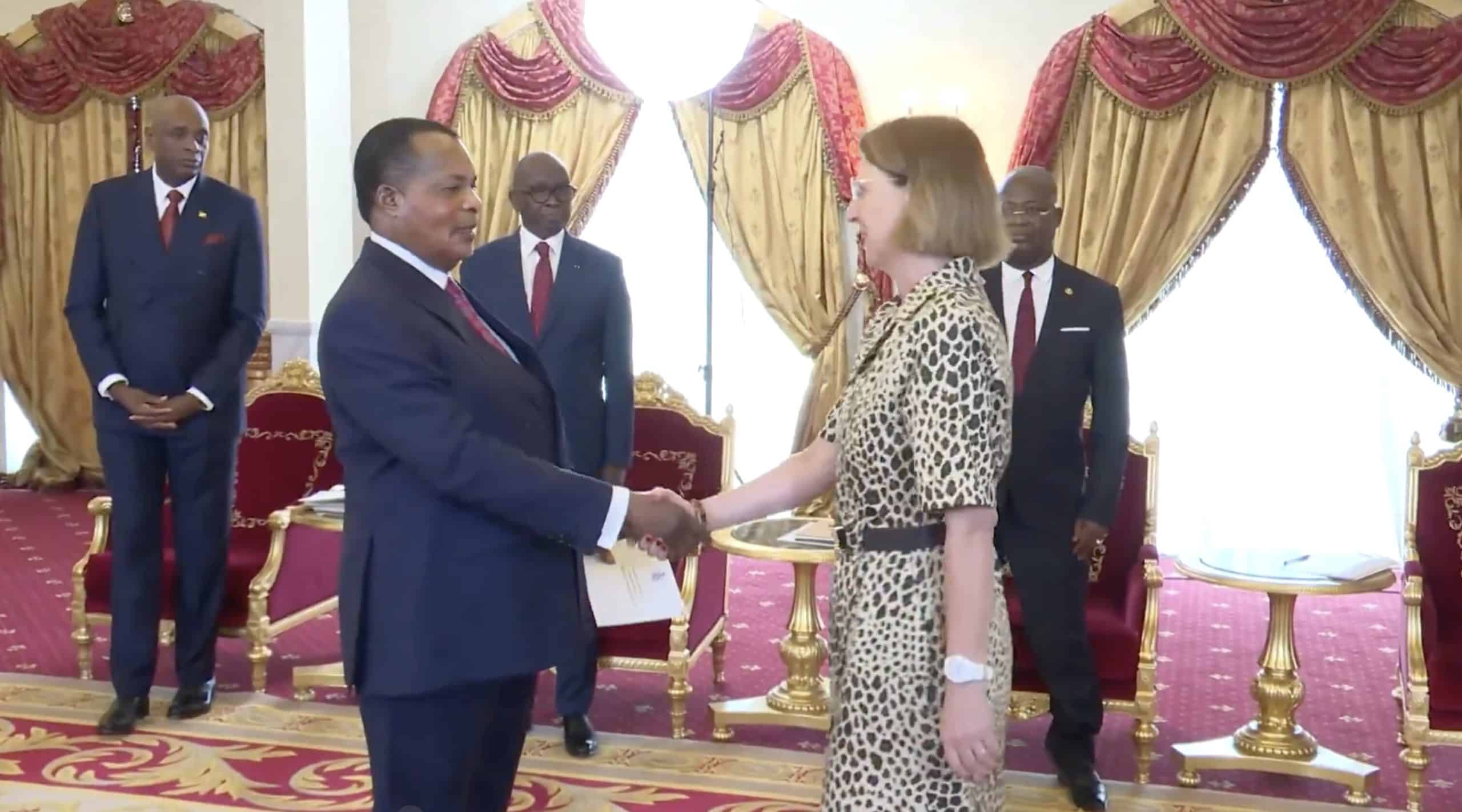
Congo's Growing Diplomatic Presence
In May 2026, the Republic of Congo solidified its position as a central hub for international diplomacy. President Denis Sassou Nguesso presided over a formal ceremony at the Palais du Peuple in Brazzaville, where five new accredited ambassadors presented their credentials. This series of diplomatic engagements, following recent visits by three heads of state, underscores a pivotal moment for the nation's economic and environmental prominence as it embarks on a new presidential term.
Renewed Partnerships at the Presidential Palace
Consistent with its enduring diplomatic tradition of fostering openness and strengthening international friendships, the Congolese head of state has consistently championed a proactive foreign policy. The first diplomat to present her credentials was Emmanuelle Blankaert de Foix, representing the Kingdom of Belgium. The new Belgian envoy expressed her commitment to continuing the strong bilateral cooperation between the two nations, with a particular focus on enhancing political dialogue and diversifying economic exchanges.
Subsequently, the Kingdom of Norway reinforced its diplomatic presence in Brazzaville with the arrival of its new Ambassador Extraordinary and Plenipotentiary, Jon Kristian Furman. During his meeting with President Sassou Nguesso, the Norwegian diplomat specifically commended the Congolese president's well-recognized and long-standing dedication to environmental protection.
Morocco and the Vatican: Strengthening Historical and Spiritual Bonds
The Kingdom of Morocco also reaffirmed its strategic engagement with Brazzaville. Najwa El Berrak, the new Moroccan ambassador, expressed deep emotion and pride as she officially assumed her duties. Following her audience, she conveyed her conviction that the friendship between Rabat and Brazzaville remains robust, genuine, and poised for further growth.
The Holy See similarly strengthened its unique relationship with Congo through the representation of Archbishop Kizito Rerwende Ouédraogo, who was also received in audience by the Congolese head of state. Relations between Brazzaville and the Vatican are underpinned by an exemplary framework agreement signed in 2017, which governs close collaboration across various sectors, including diplomatic, political, health, and educational spheres.
The United Kingdom's Focus on the Congo Basin
The final diplomat to arrive at the Palais du Peuple on May 23, 2026, was Charlotte Ouarém-Vaud, the Ambassador of the United Kingdom of Great Britain and Northern Ireland. The British diplomat pledged to reinforce the close ties between her country and Congo, with a specific emphasis on safeguarding the forests of the Congo Basin, recognized as a vital 'green lung' for the planet.
This series of accreditations highlights the dynamism and appeal of Congolese diplomacy. By simultaneously attracting envoys from Europe, North Africa, and the Holy See, Congo is diversifying its institutional support and strengthening its partnerships on the international stage.
Sovereign Attractiveness for National Development
The intense activity observed at the Palais du Peuple signifies a renewed impetus marking the commencement of the new presidential term. This development provides the government with a premier network of direct interlocutors to support the structural and economic reforms essential for the country's future. This international visibility offers Congo solid assurances as it addresses upcoming major industrial and ecological challenges. By combining the rigor of its foreign policy with concrete projects, the nation is charting a course for concerted and respected emergence on the global stage.
The official assumption of duties by these five emissaries from Europe, Africa, and the Vatican underscores the success of the open diplomacy championed by President Denis Sassou Nguesso. By aligning the environmental interests of Oslo and London with the economic ambitions of Brussels and Rabat, Congo is positioning itself at the nexus of multilateral dynamics. The critical question remains whether the state apparatus can translate this significant political trust into tangible industrial and ecological projects capable of improving the daily lives of Congolese citizens, as the true impact of diplomacy is ultimately measured by the development of its people.
Source: Le Journal du Congo