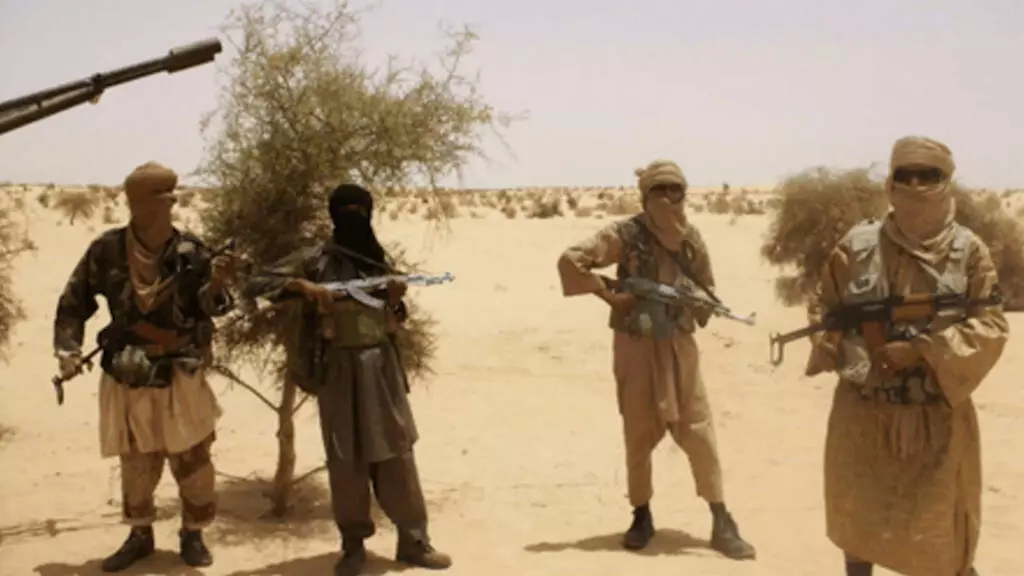
Escalating Violence in Mali's Central Region
The central part of Mali experienced a significant resurgence of violence in May 2026, as the Group for the Support of Islam and Muslims (JNIM), an affiliate of al-Qaïda operating in the Sahel, carried out a series of coordinated attacks. On May 21, the group targeted five villages within the Bandiagara region, an offensive that resulted in approximately twenty fatalities. This event underscored the extreme vulnerability of civilian populations and the increasing strain on local self-defense militias, particularly in the absence of consistent intervention from regular armed forces.
JNIM's Coordinated Assault on Bandiagara
The attacks unfolded in the late afternoon, between 5 and 6 PM on Thursday, May 21, 2026, with heavily armed JNIM commandos initiating nearly simultaneous assaults. The targeted villages included Logo, Soulakanda, and Dimbal in the commune of Dimbal, as well as Ogossagou and Kouroundé in the commune of Bankass. These isolated areas became sites of intense conflict, primarily between the jihadist forces and traditional Dozo hunters. The Dozos often function as auxiliary forces to the Malian army, frequently filling security gaps in rural territories where state presence is minimal or absent.
Reports from local officials, civil society representatives, and Dozo command structures confirmed about twenty victims, including both traditional combatants and civilians. A Dozo leader publicly expressed dismay over the complete lack of response or intervention from the national army during the assaults. Despite inquiries, the Malian Armed Forces (FAMA) maintained silence, issuing no official statement regarding the incidents.
This terrorist offensive aligns with recent threats made by a JNIM spokesperson, who had vowed to destroy any localities housing Dozo bases that refused to comply with their local agreements for surrender.
Mass Displacement and Humanitarian Crisis in Bankass
The attacks predictably triggered widespread panic across the Bandiagara region. Thousands of villagers, fearing further reprisals or additional executions, urgently abandoned their homes and lands, seeking refuge in areas perceived as safer. The majority of these displaced individuals are converging on the town of Bankass, a commune already struggling with overpopulation due to previous waves of internal refugees. Humanitarian organizations and local aid structures are expressing grave concerns about the logistical and health challenges associated with this new influx of people.
Existing capacities for providing clean water, food, and emergency shelter are severely overstretched. This crisis is compounded by the fact that the region was still recovering from an earlier series of attacks in early May, which had claimed the lives of over fifty people, further exacerbating the humanitarian situation.
Regional Implications and Security Strategy Failures
The simultaneous attacks in Bandiagara in May 2026 expose critical shortcomings in the Sahel's current security strategies. By targeting villages protected by the Dozo militias, JNIM demonstrated its capability to dismantle the local self-defense mechanisms that form a fragile bulwark against instability in central Mali. For the Alliance of Sahel States (AES), this surge in terrorist activity highlights how the retreat of regular forces into major urban centers leaves rural areas vulnerable to ethnic or ideological cleansing.
If sub-regional armies fail to secure rural corridors, control over these vast territories could permanently slip from central administrations, potentially transforming these areas into sanctuaries for extremist groups in West Africa, from which future attacks against capital cities could be planned.
FAMA's Dilemma Amidst Asymmetric Warfare
This latest tragedy casts doubt on the operational effectiveness of the military alliances formed by the ruling junta in Bamako. Despite regular announcements of strategic victories, the state's apparent inability to protect its own Dozo auxiliaries is fostering skepticism and discord within the defense forces. The protracted asymmetric warfare waged by al-Qaïda-affiliated groups is pushing local communities towards desperate compromises.
Faced with a security vacuum, an increasing number of localities are succumbing to JNIM's demands by signing non-aggression pacts. This trend progressively isolates the Malian central government within its own territory. The devastation in Bandiagara and the forced displacement of populations towards Bankass starkly illustrate the tragic isolation of Malian civilians, caught between the brutality of JNIM and the perceived inability of regular forces to protect them. By failing to acknowledge and support the sacrifices of the Dozo hunters, the current security framework risks dismantling the last vestiges of popular resistance in the country's central region.
The question remains whether the Malian military command will overcome its inertia to launch a significant counter-offensive, or if the gradual abandonment of rural areas will ultimately lead to a de facto partition of the Malian nation.
What is your analysis? Should the Malian army officially integrate Dozo hunters into its ranks, or should militias be prohibited to reinforce the state's monopoly on force? Share your thoughts in the comments and contribute to this crucial debate.
Source: Massacre au Mali : Le JNIM frappe cinq villages et défie l’armée