Rising Xenophobia Prompts Urgent Evacuation in Durban
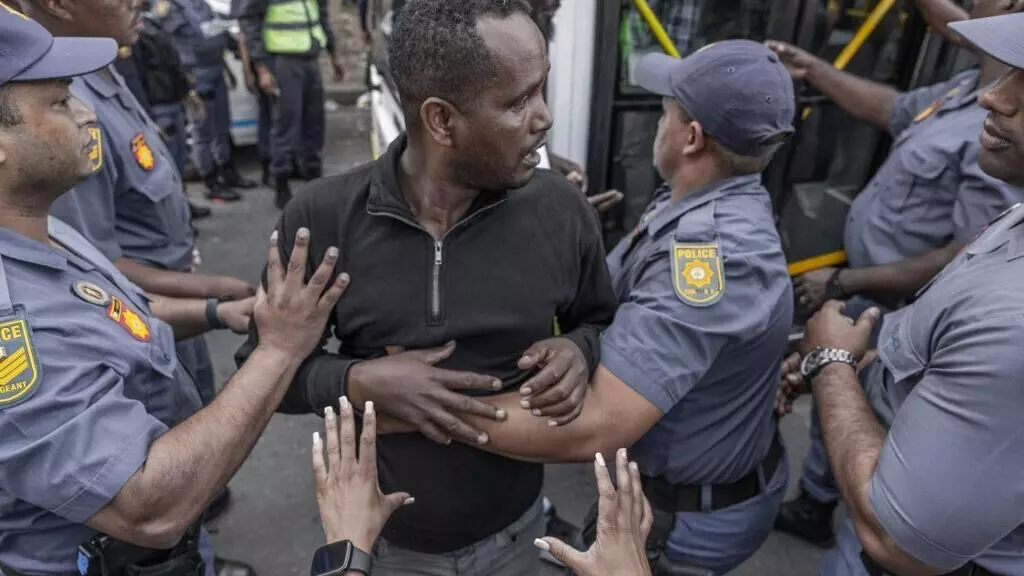
In May 2026, South Africa once again experienced a surge in xenophobic sentiment, leading to an urgent evacuation of approximately 400 foreign nationals in Durban. These individuals, many of whom were women and young children, had sought refuge within the Diakonia Christian Centre church to escape potential violence from anti-migrant groups. The incident underscores deep societal divisions and the persistent challenges facing the nation, particularly in the lead-up to significant local elections.
Church Becomes Refuge Amidst Anti-Immigration Militia Activity
The situation unfolded at the Diakonia Christian Centre, where families from various African countries, including the Democratic Republic of Congo (DRC), Ethiopia, Rwanda, and Somalia, had gathered. Fearing lynchings and other acts of violence, these migrants barricaded themselves inside the religious institution. On May 21, authorities intervened, escorting the terrified individuals onto government buses for transfer to a designated refugee retention center, a measure intended to ensure their safety.
During the evacuation, a poignant scene unfolded as many migrants pressed their residency permits and identification documents against the bus windows. This desperate act was an attempt to affirm the legality of their presence in South Africa to the hostile crowd that had gathered outside. Xenophobic activists were observed cheering the forced departure, chanting slogans such as "Get out!" while law enforcement officials watched, seemingly unable to intervene effectively.
Migrants Express Despair Amidst "March and March" Ultimatum
Testimonies from those affected by these events reveal a profound sense of dehumanization. Raphael Bahebwa, a Congolese asylum seeker, shared his despair on social media, stating, "It's like I'm not human." Another survivor, speaking anonymously, reflected on the tragic irony of their journey: "I fled war in my country, yet I find no peace in South Africa."
This escalation of animosity is directly linked to the activities of a radical group based in Durban known as "March and March." On May 20, this organization orchestrated a major demonstration, effectively paralyzing the city. During the protest, "March and March" populistically accused foreign nationals of being the primary drivers of crime and unemployment within the province. In a concerning display of ultra-nationalist fervor, the group unilaterally issued an ultimatum, demanding that all undocumented foreign nationals depart South African territory by June 30, 2026. Despite lacking any legal or institutional basis, this threat has caused widespread panic among migrant communities.
Broader Implications for South Africa and African Integration
The events in Durban in May 2026 highlight that xenophobia has regrettably become a significant factor in South African electoral politics. With local elections six months away, political parties struggling for relevance may be tempted to exploit social grievances and failures in public services by scapegoating foreign nationals. Critics argue that by not decisively addressing the actions of groups like "March and March," local authorities are taking a dangerous path.
This trend not only risks damaging Pretoria's international reputation but also poses a direct threat to continental economic integration. At a time when Africa is striving to establish a free trade area (AfCFTA) based on the free movement of people and goods, such internal conflicts undermine the very principles of unity and cooperation.
Government Inaction and Humanitarian Concerns
The perceived passivity of the government in response to the June 30 ultimatum has raised alarm among human rights organizations. The absence of a formal condemnation from any legal authority regarding the militia's threats suggests that the pre-election campaign climate may be hindering courageous republican action. This security vacuum has compelled humanitarian networks to organize independently to provide assistance.
However, with government reception centers already at capacity, the transfer of 400 individuals merely shifts the problem rather than resolving it. There are growing fears of widespread urban pogroms if hate speech is not effectively countered by the justice system before the summer. The forced evacuation of refugees from the Diakonia church in Durban represents a troubling setback for the nation of Nelson Mandela, once a global symbol of tolerance and human rights. By allowing militias to dictate terms and terrorize individuals, including women and children with legitimate documents, South Africa appears to be sinking into a moral crisis that threatens the unity of the African continent itself. The critical question remains whether the government in Pretoria will assert control over its streets before the fabricated June 30 ultimatum expires, or if short-term electoral calculations will ultimately sacrifice human lives in the pursuit of nationalism.
Source: Le Journal du Congo